
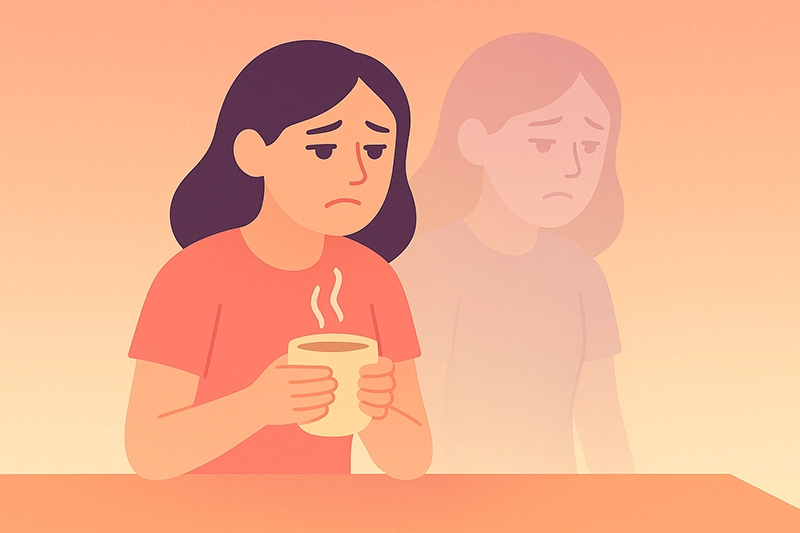
DPDR Meaning: A Simple Guide for Anyone Feeling “Not Real”
If you found your way here, there’s a good chance you’ve experienced that strange, unsettling feeling where you don’t feel connected to yourself, the world, or the moment you’re in. Maybe it felt dreamlike, distant, or like you were watching your life instead of living it.
You might have asked yourself:
- "Why does everything suddenly feel unreal?"
- "Why do I feel unfamiliar to myself?"
- "Is this DPDR?"
DPDR stands for Depersonalization-Derealization. It describes two related experiences where either you feel unreal (depersonalization) or the world feels unreal (derealization). It can be scary — but it’s a known, common, and reversible response of the nervous system.
What DPDR Actually Means
Most people with DPDR describe it as a curtain separating them from their own life. You know things are real — you’re fully aware of your surroundings — but it doesn’t feel the way it should.
DPDR does NOT mean:
- You're losing your mind
- You're disconnected from reality
- You're in danger
It simply means your brain is overwhelmed and trying to protect you by temporarily turning down your emotional and sensory “volume.”
What Depersonalization Feels Like
Depersonalization is the “DP” part of DPDR. It describes a feeling of being disconnected from your self.
People often describe it as:
- "I feel like I'm watching myself from the outside."
- "My voice doesn't feel like mine."
- "I feel blank, numb, or far away from myself."
- "I'm here, but I don't feel like 'me.'"
Emotionally, it can feel like your identity is wrapped in fog.
What Derealization Feels Like
Derealization is the “DR” part of DPDR. This describes a sense of unreality toward your surroundings.
Common descriptions include:
- "The world looks dreamlike."
- "Everything feels too bright, too flat, or too sharp."
- "I'm familiar with this place, but it feels unfamiliar."
- "I feel like there's a glass wall between me and everything."
Your senses work — they’re just not fully connecting.
Why DPDR Happens
DPDR often appears during periods of intense stress, anxiety, panic, burnout, or emotional overload. It can also show up after a major life change, lack of sleep, or prolonged fear.
The brain uses dissociation as a protection mechanism. When your nervous system becomes too overwhelmed, it creates distance so you don’t feel everything all at once.
DPDR Is Uncomfortable, But Not Dangerous
One of the biggest fears people have is that DPDR means they're going crazy or losing control. But research shows that:
- Your sense of reality stays intact
- You know who and where you are
- You remain fully functional
- Your brain is protecting you — not failing
DPDR feels alarming, but it’s physiologically safe.
How to Start Grounding Yourself
You don’t have to “fight” DPDR — but you can guide yourself gently back into the present moment. Here are simple grounding steps many people find helpful:
1. Feel Your Breath
Slow inhales and longer exhales help calm the nervous system.
2. Notice Sensations
Touch something textured — clothing, carpet, a cold drink. Sensory input helps reconnect perception.
3. Look Around the Room
Pick one object, describe it in detail, and name its color, size, or shape.
4. Move Slowly
Walking around the room or stretching helps remind the brain, “I'm here, and I'm safe.”
The Meaning of DPDR Is Simpler Than It Seems
DPDR doesn’t mean you're broken — it means your mind is overwhelmed. When stress eases and your body feels safer, the sensations soften. Many people recover completely, often faster than they expect.
Your brain isn’t trying to harm you — it’s trying to protect you.
Presently includes grounding tools designed for moments of DPDR and anxiety, including breathing guides, sensory resets, calming audio, and a quick “Emergency” section you can use anytime.