
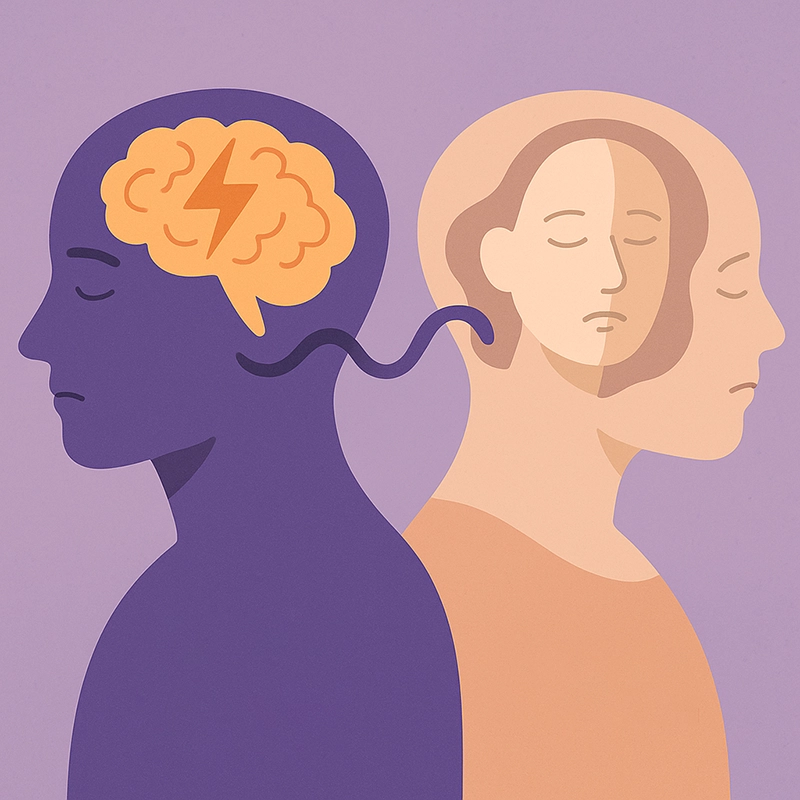
How Bipolar Mood Shifts Can Trigger Dissociation
Bipolar disorder affects energy, mood, sleep, and thought patterns — and these rapid shifts can sometimes trigger depersonalization or derealization. Many people with bipolar disorder report feeling disconnected from themselves or reality during depressive, manic, or mixed episodes.
If this is happening to you, you’re not imagining it. There are clear neurological and emotional links between bipolar symptoms and dissociation.
1. Depersonalization During Depressive Episodes
During bipolar depression, the nervous system slows down and emotional processing becomes blunted. This can create:
- Feeling numb or emotionally distant
- Watching life rather than participating in it
- Feeling disconnected from thoughts or identity
- Flatness or “unreality” in everyday experiences
These symptoms are not a sign of “getting worse.” They are a protective shut-down response that happens when the brain feels overwhelmed.
2. Depersonalization During Mania or Hypomania
During manic or hypomanic states, the brain becomes overstimulated. This can lead to:
- Racing thoughts that feel disconnected from “you”
- Sensory overload that makes your surroundings feel unreal
- Feeling like your mind is moving faster than your body
- A sense of being outside of yourself or observing your actions
In mania, dissociation can appear because the brain is moving too fast, not too slow — the opposite cause of depressive DPDR, yet the same detached sensation.
3. Mixed Episodes Can Intensify DPDR
Mixed states involve agitation + depression at the same time, and this combination strongly increases the likelihood of dissociation.
People describe feeling:
- Emotionally overwhelmed but simultaneously numb
- A surge of anxiety mixed with exhaustion
- Detached from their own behaviors or impulses
- Disconnected from time, surroundings, or self
4. Why Bipolar Disorder and DPDR Overlap Neurologically
Both bipolar disorder and depersonalization involve:
- Changes in prefrontal cortex activity
- Nervous system dysregulation
- Sensory processing changes
- Altered emotional perception
When the brain is overwhelmed, overstimulated, or depleted, depersonalization acts as a safety switch to prevent emotional overload.
5. What Helps Reduce Bipolar-Related Depersonalization
1. Mood stabilization (therapy + medication when appropriate)
Keeping mood swings regulated is the most effective way to reduce DPDR linked to bipolar disorder.
2. Managing overstimulation
- Reduce caffeine
- Limit sensory overload at night
- Avoid sleep deprivation, which intensifies dissociation
3. Grounding techniques during mood episodes
- Deep, slow breathing to calm the nervous system
- Sensory grounding (temperature, textures, movement)
- Orientation techniques like scanning the room
4. Sleep regulation
Nothing destabilizes mood — or triggers DPDR — faster than sleep disruption.
5. Reassurance and education
Understanding that dissociation is a temporary response prevents the fear spiral that makes symptoms worse.
You Are Not “Losing Touch With Reality” — Your Brain Is Protecting You
Dissociation in bipolar disorder is incredibly common and highly treatable. As mood stabilizes and stress decreases, depersonalization almost always fades.
You are not broken. Your brain is overwhelmed — and it can recover.
Presently includes grounding tools designed for DPDR — to help you stabilize during emotional overload, anxiety spikes, and dissociation.